
Down 3 and Counting

By G. Lee Southard, PhD

In Tennis, when your opponent is at love-40, you are three points down in a game, and statistics say you will lose the game, there is a 95% chance.

There is a new, more alarming statistic. Maybe this is why people do not like statistics—the truth.

The following narrative taken from a well-respected research source document read as follows:
“….. 85% of American adults raised Christian, nearly a quarter of them no longer identify with Christianity. Former Christians now represent 19.2% of the US adult population overall. To put this into perspective, Alan Cooperman, Pew Research Director of Religious Research, says there are more than four former Christians for every convert to Christianity.”
Source: James Emery White. Meet Generation Z page 23. Baker Publishing group.

Do the math. According to White, we are going down a net 3 (love 30) in terms of new disciples every year. Game, set match.

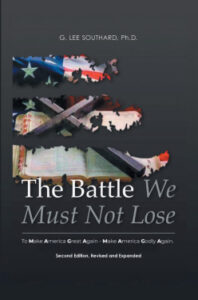
This is more discouraging than the findings expressed in my book “The Battle We Must Not Lose.” The book shows that in America, the Religiously Unaffiliated will surpass Christians by 2039. Christians are decreasing at about 1 million per year, while the religiously unaffiliated increase at 3.3 million per year. Of these, 2.5 million/year were once raised in a religion (Christianity). They are fed by the 1.6 million/year who left the church before age 18.

These trends indicate that we need to focus on making disciples in the church. The number one reason people leave is unbelief. Therefore, we need to have more effort in addressing doubts before they become unbelief. The focus needs to be on middle and high schoolers and their parents.


You might also enjoy

The Battle We Must Not Lose

This book argues that evil has advanced in America largely because
the once-sacred Christian values that shaped our culture have been
steadily weakened. As Christian influence has diminished, forces hostile
to America’s moral, spiritual, and civic wellbeing have grown stronger. The
decline in Christian influence is not abstract; it is rooted directly in the
shrinking percentage of Christians in America—an erosion largely caused
by the loss of Christian young people from the faith and from the church.
The importance of this dynamic is rooted in the fact that today’s youth
are tomorrow’s leaders in business, government, education, religion, the
military, and public life. Whether they possess a solid Christian worldview
will determine their confidence in the faith and their ability to influence
America toward what is good, true, and just. In addition, without a robust
Christian education, they will be ill-equipped to lead. Without it, they will
be unable to shape America for the better.
This book offers a battle plan—clear, strategic, and actionable based
on the premise that if the church recommits itself to the intentional faith
development of its youth, it will not only strengthen the next generation
of disciples but help preserve freedom and moral order in America. For as
Christian youth grow into Christian leaders, they will shape the nation’s
direction for decades to come.
Recently, President Trump proclaimed that “Making America Great
Again” will usher in a Golden Age for our nation. We pray he is right. But
unless we also Make America Godly Again, any Golden Age will be
brief.

Share this Post